
October 19, 2026
A market shaped by geopolitics and regulation: the opportunities and challenges for law firms
When asked to identify the biggest challenge to their business, our global industry leaders consistently highlight the transition of geopolitics and regulation from background risk to primary market drivers.
Conversations across global markets highlight that geopolitical instability is increasingly determining where capital flows, how transactions are structured and where disputes and investigations arise. The effects are particularly visible in energy, commodities, international trade and technology, as political instability, trade policy and regulatory intervention move from background considerations to direct commercial drivers.
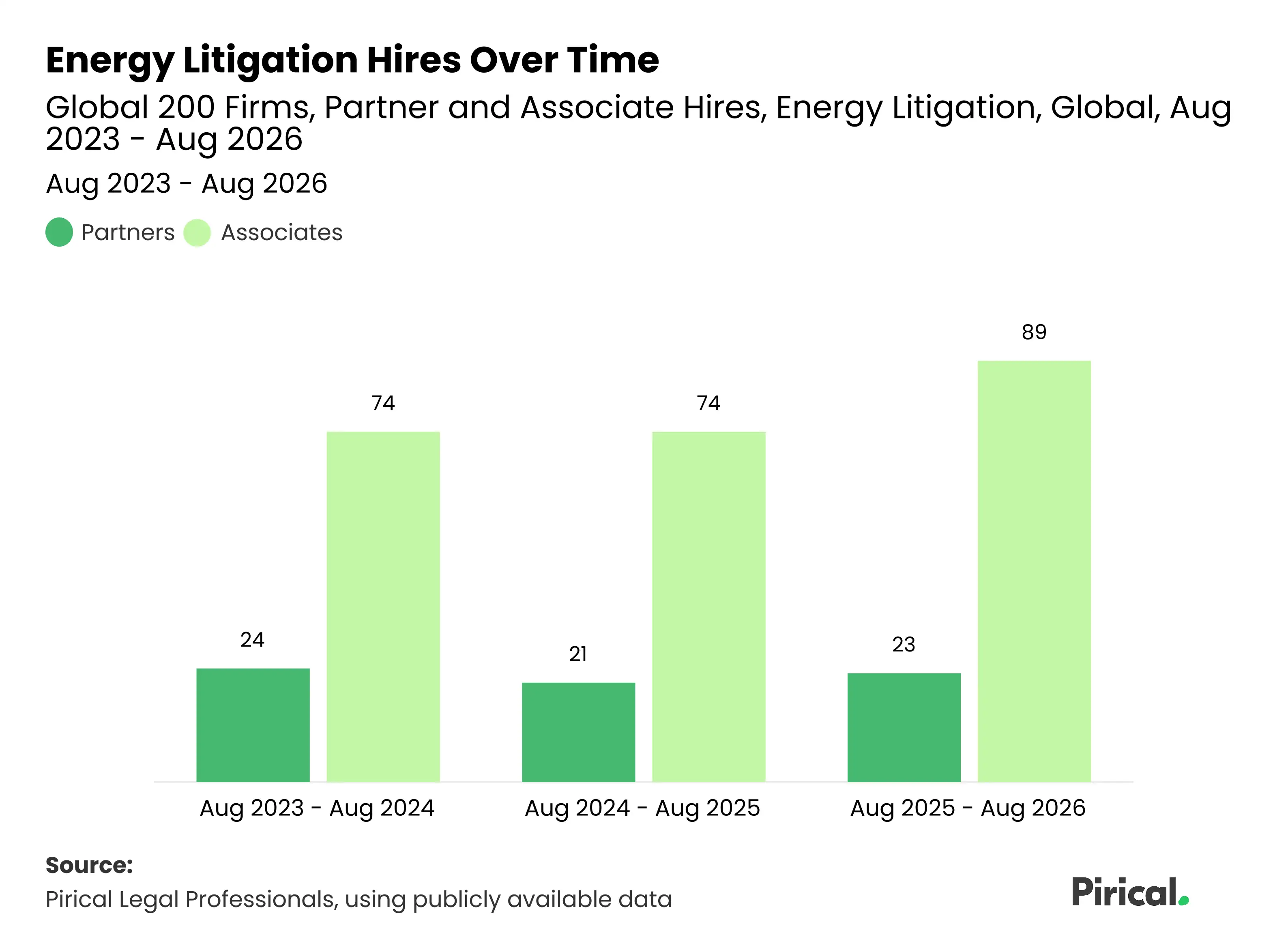
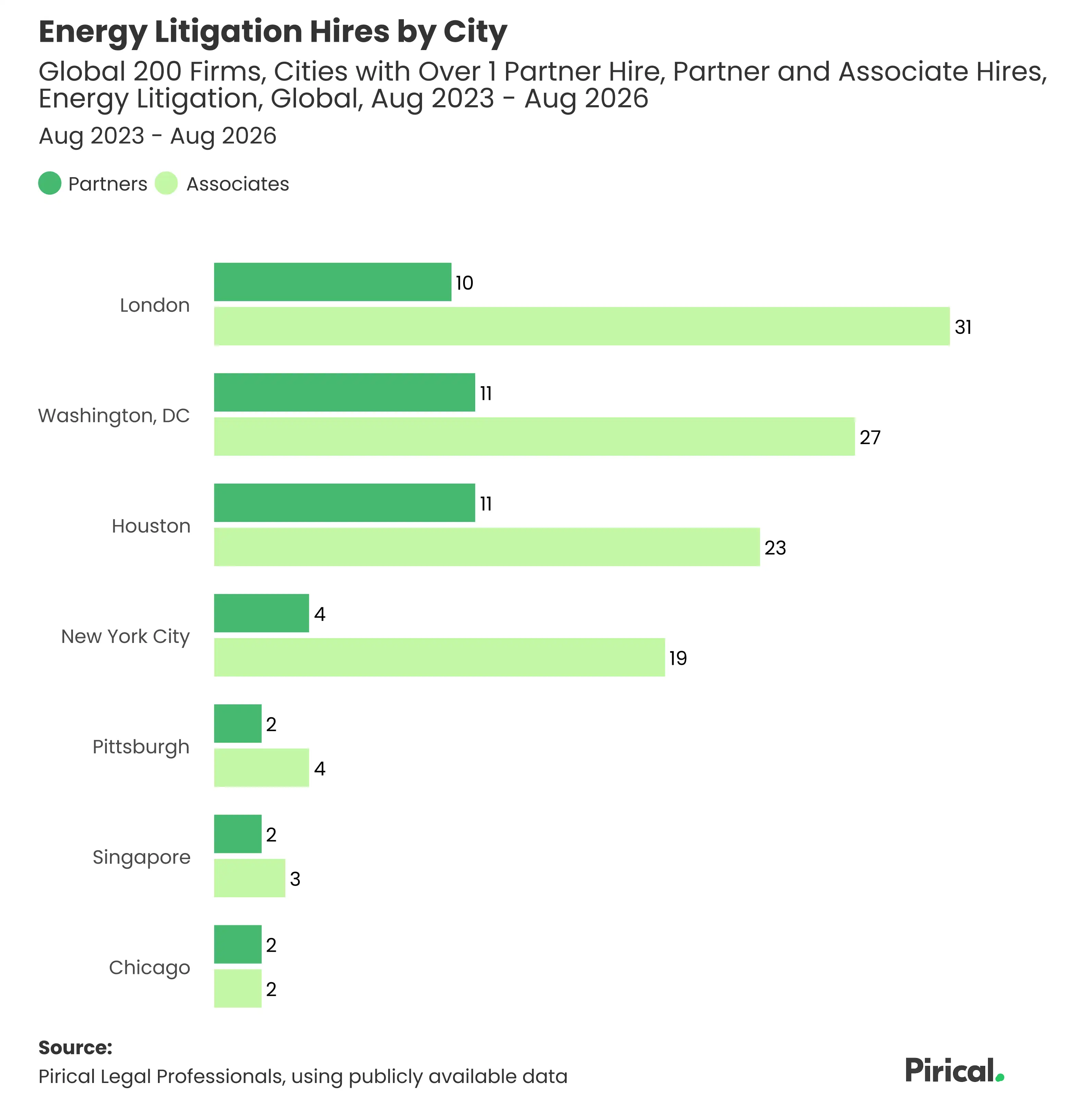
Global energy and commodity markets provide one of the clearest examples. High-value energy disputes are expected to remain exceptionally active for the next ‘one, two, three, four, five years’, with conflicts, such as Iran, wider geopolitical instability and commodity volatility disrupting contractual relationships. According to publicly available data, tracked by Pirical global energy litigation associate hires rose 20% (to 89) in the last year, after a 0% increase in the previous year.
As prices rise, commercial incentives can change quickly: ‘When commodity prices rise, you see people breaching contracts because they can sell to someone else for a higher value.’ The consequences extend well beyond producers and traders. Scarcity and higher input prices create ‘a knock-on impact on end users’, generating litigation and arbitration throughout supply chains. Oil and gas disputes are expected to remain particularly active, while shipping arbitration remains busy but highly specialised. Fraud-related disputes have been ‘constantly growing’ over the past five years, cryptocurrency disputes are emerging as a potentially significant new category, and construction remains a perennial source of international arbitration work.
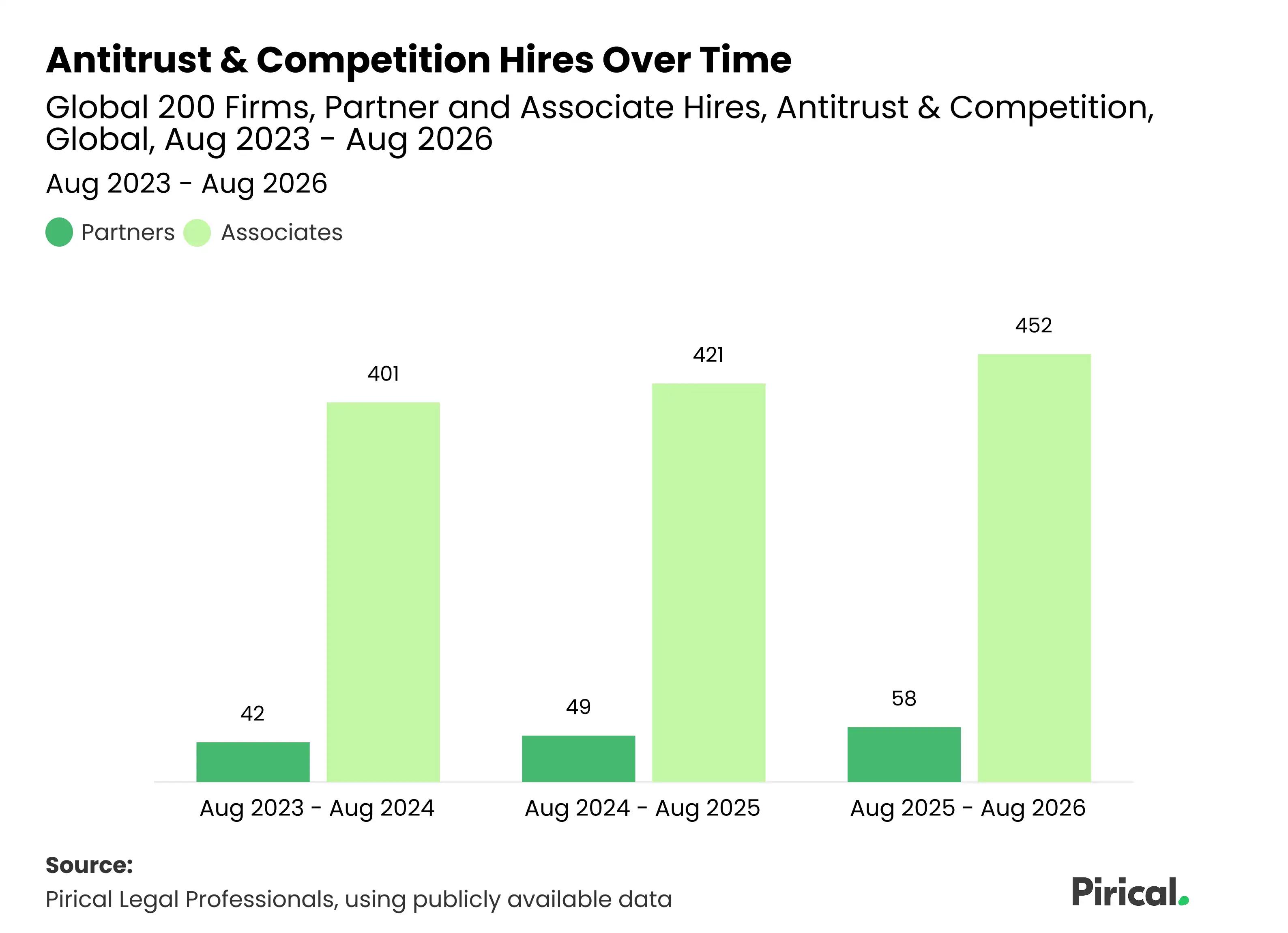
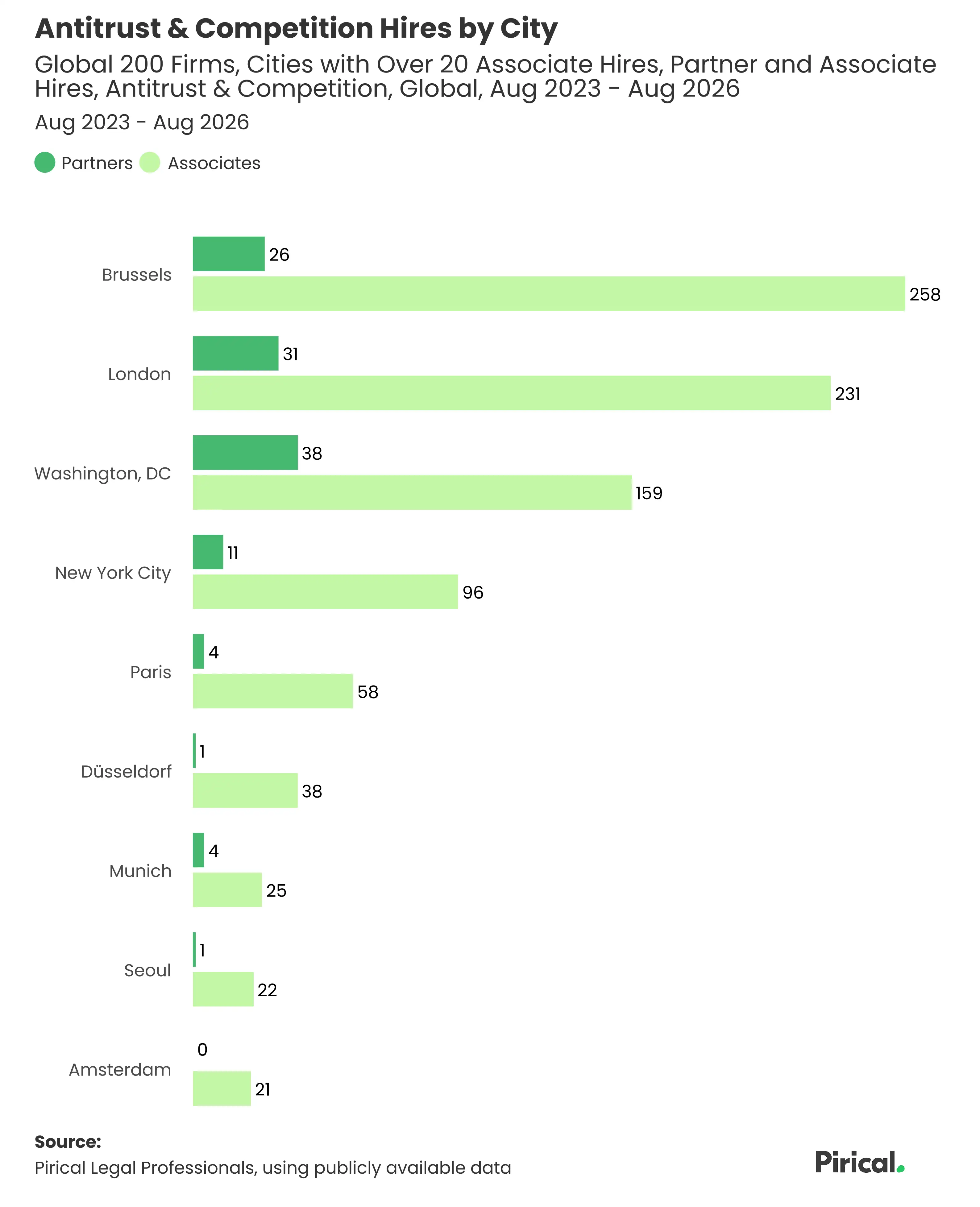
Sources note regulatory intervention is moving much earlier into global transaction strategy. Regulatory analysis is becoming an upfront consideration capable of shaping whether and how a transaction proceeds, rather than a later stage execution issue. Competition lawyers are becoming ‘more prominent in a deal scenario’ and ‘more involved in early stage’ planning, as transactions increasingly face the dual hurdles of merger control and foreign direct investment review. Pirical data highlights that Brussels, for example, where EU merger control is centrally administered, leads antitrust and competition associate hiring over the last three years with 258 hires. It is also third for partner hires (26) behind London (31) and Washington DC (38). Antitrust and competition partner hires in Brussels more than doubled in the last three years (from 5-12). In the latest year, only Washington DC hired more (15).
In Asia, international trade and technology are attracting growing regulatory attention. Areas of scrutiny include strategic technology transfers, export controls, ports, customs processes and international supply chains. One source described an ‘AI arms race’ around strategically important technology and identified the potential for investigations involving ‘facilitation payments at ports or at borders’, alongside customs issues and supply chain disruption.
Trade and regulatory uncertainty are also influencing international capital allocation. One commentator sees tariff policy and uncertainty around international trade and regulation contributing to a growing preference among some investors for US assets over non-US opportunities. In life sciences specifically, some companies are reluctant to license new therapeutic candidates outside the US, because international drug pricing comparisons could constrain achievable prices. They may instead pursue US-only approval, allowing them to ‘facilitate a higher price’ without creating international pricing benchmarks.
Within US registered funds, regulation is also helping to blur the traditional boundary between public and private markets. Greater inclusion of private assets within public fund structures, facilitated by the SEC, is becoming an important industry focus. This is occurring alongside an accelerating move from mutual funds towards ETFs and persistent fee compression, increasing pressure on managers to streamline operations, reduce costs and preserve margins.
Geopolitical and regulatory risk is moving upstream, shaping capital allocation, transactions and disputes earlier and rewarding firms that can connect regulatory, transactional and contentious expertise across borders. The challenge is anticipating where risk will surface next; the opportunity is getting there first.
If you would like to learn more about these, or any other, global market trends and consider their impact on your business growth and or hiring plans, we would be delighted to talk to you. Our work gives us regular access to senior leaders, across multiple sectors including energy, insurance, retail, investment management, technology, law and financial services.
To keep up to date with the latest Edward Drummond news and insights, follow us on LinkedIn.